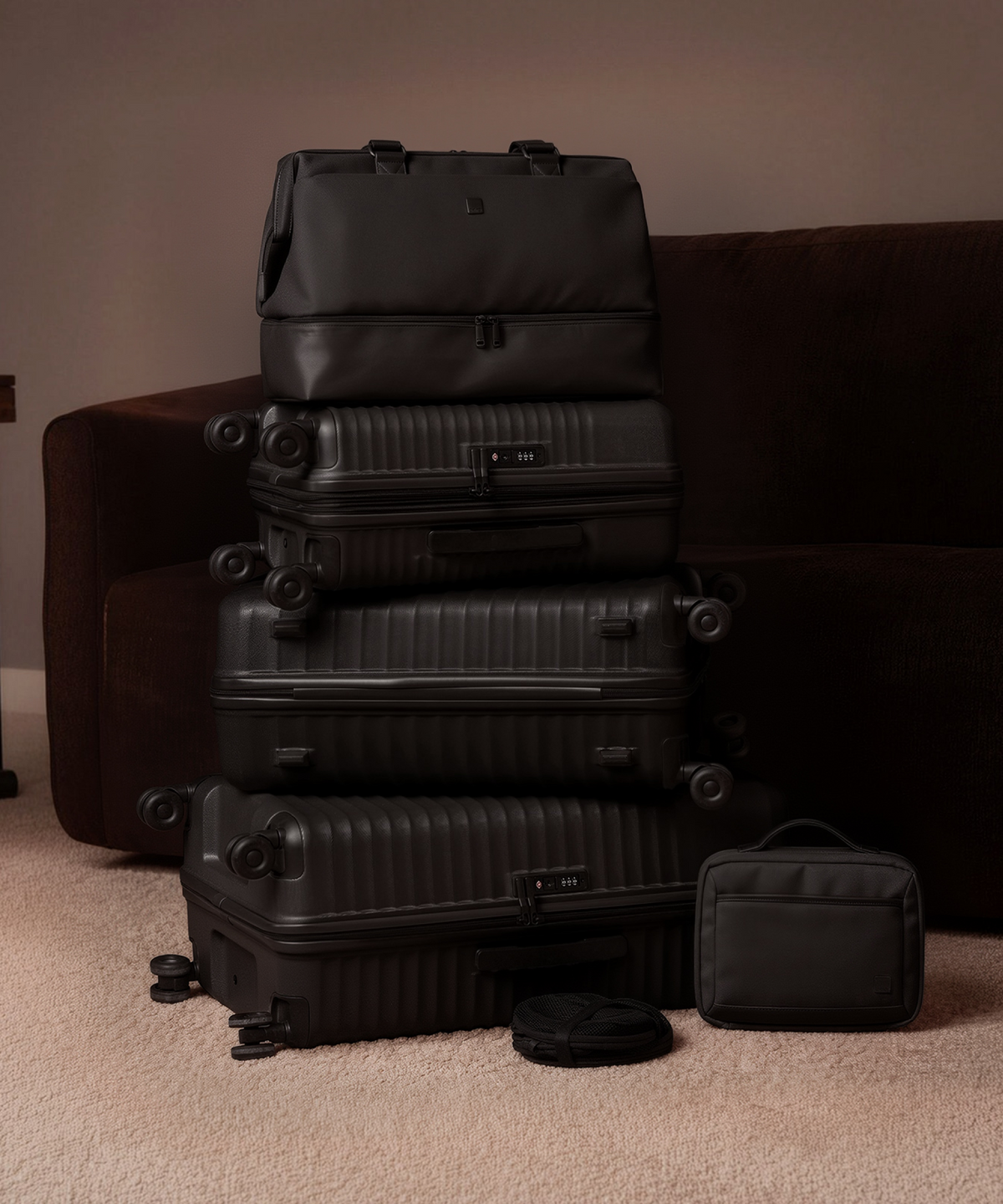
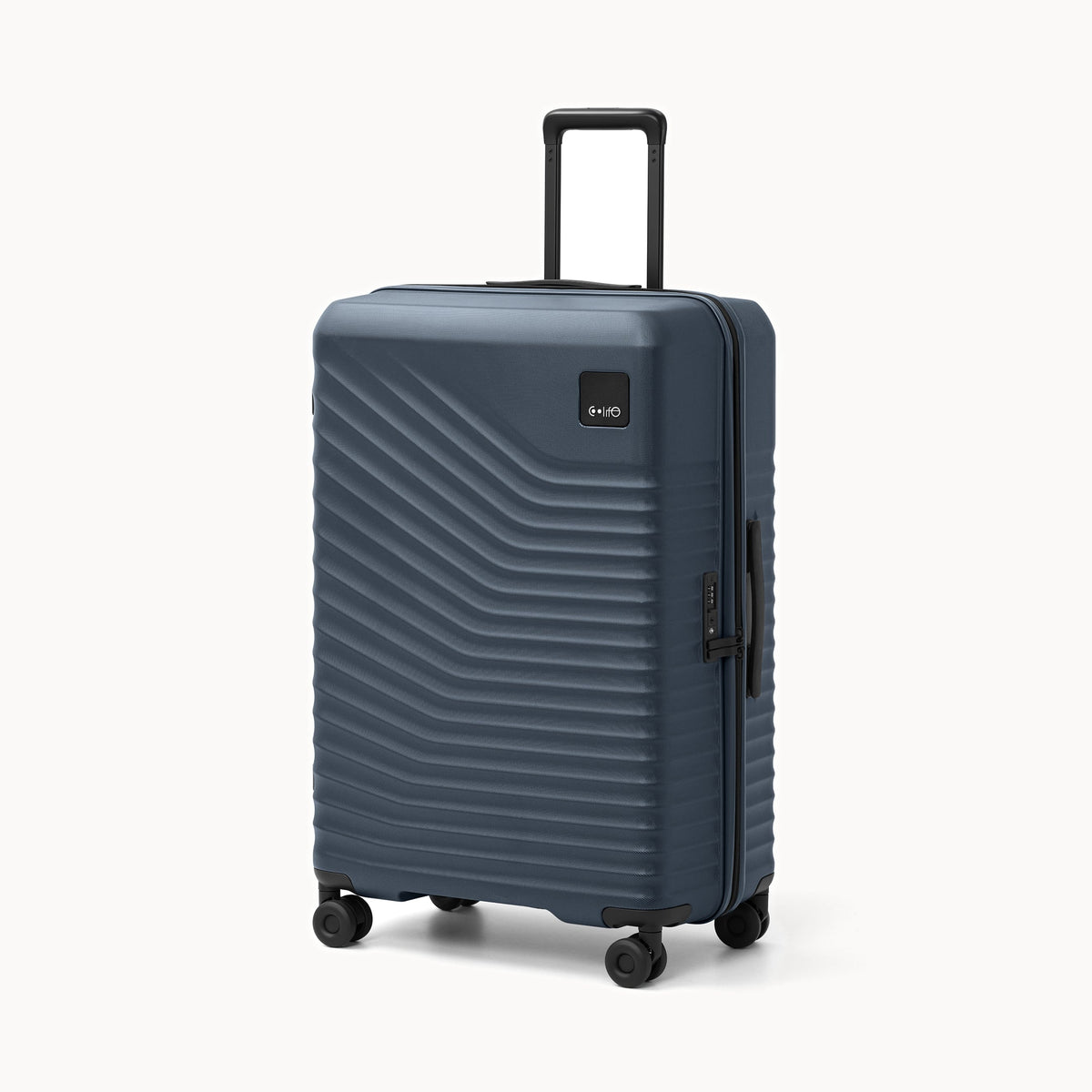
A suitcase can look great online and still become frustrating the moment you start traveling with it.
The difference often comes down to details you don't notice in a product photo: how smoothly the wheels move, how stable the handle feels, whether the interior actually helps you organize your belongings, and whether the suitcase gives you enough space without becoming difficult to manage.
If you're shopping for hardside luggage, don't focus on appearance alone.
The right hardside suitcase should balance protection, weight, mobility, organization, and usable packing space.
Here are seven features worth considering before you choose one.
Quick Answer: What Should You Look for in Hardside Luggage?
When comparing hardside luggage, pay attention to:
-
Shell material and construction
-
Overall suitcase weight
-
Spinner wheel performance
-
Telescoping handle design
-
Expandable packing capacity
-
Interior organization
-
Locks, zippers, and travel-friendly details
The best hardside luggage for you depends on how often you travel, how much you pack, and whether you're shopping for a carry-on suitcase, checked luggage, or a complete luggage set.
1. Start With the Hardside Shell
The shell is the most recognizable part of a hardside suitcase, but not all hard shells behave the same way.
Common luggage materials include polycarbonate, ABS, and blended constructions, each offering a different balance between weight, flexibility, durability, and cost.
Rather than focusing only on the material name, think about what the shell needs to do during a real trip.
A practical hardshell suitcase should:
-
Maintain its structure while packed
-
Handle normal bumps and movement during travel
-
Be manageable enough to lift and move
-
Be relatively easy to clean after a trip
The shell is important, but remember that luggage durability depends on the complete suitcase—not just the outer case.
Wheels, handles, zippers, and other components matter just as much.
2. Check the Weight Before You Check the Capacity
A large suitcase may offer plenty of room, but that space becomes less useful if the suitcase itself starts heavy.
Every pair of shoes, jacket, toiletry bag, and souvenir adds weight.
That's why the empty weight of the suitcase matters, especially when you're choosing checked luggage.
A lighter starting weight can give you more flexibility when packing while making the suitcase easier to lift into:
-
Car trunks
-
Hotel luggage racks
-
Train storage areas
-
Airport scales
-
Overhead compartments, when applicable
However, lightweight luggage shouldn't mean choosing weight alone.
The goal is a balance between manageable weight and practical construction.
3. Pay Attention to the Spinner Wheels
Suitcase wheels are easy to overlook until you're walking through a large airport.
Then they become one of the most important parts of your luggage.
Spinner luggage typically uses four multi-directional wheel assemblies that allow the suitcase to move while remaining upright.
This can make it easier to:
-
Navigate airport terminals
-
Turn through narrow spaces
-
Move through hotel lobbies
-
Stand in security lines
-
Walk alongside other travelers
-
Manage more than one piece of luggage
When comparing hardside suitcases, look beyond the phrase “spinner wheels.”
The real question is:
Does the wheel system make the suitcase easier to control when it's fully packed?
A suitcase that rolls smoothly when empty may feel very different once you've added a week's worth of belongings.
4. Don't Ignore the Telescoping Handle
The telescoping handle is one of the most frequently used parts of any rolling suitcase.
It should feel natural when you're walking—not like you're constantly adjusting your pace to the luggage.
When evaluating a handle, consider:
-
Handle height
-
Grip comfort
-
Stability
-
Extension positions
-
How smoothly it retracts
-
Whether it feels comfortable when the suitcase is loaded
This becomes particularly important for frequent travelers.
Dragging a poorly designed suitcase through several airports may be far more annoying than any missing interior pocket.
5. Decide Whether You Need Expandable Luggage
Expandable luggage includes additional space that can usually be opened through a zipper or expansion system.
It can be especially useful when:
-
You shop during trips
-
You bring home souvenirs
-
You're packing for changing weather
-
Your return packing is less organized than your departure packing
-
You occasionally need extra capacity but don't want a larger suitcase every time
For many travelers, expandability acts as a useful “just in case” feature.
You can travel with the suitcase in its standard configuration and use additional space only when needed.
There is one important consideration:
Expanding a suitcase changes its exterior depth.
If you're flying, always check the suitcase's actual dimensions against your airline's current baggage requirements.
6. Look Inside the Suitcase, Not Just Outside
A suitcase with a beautiful exterior can still be difficult to pack.
Good interior organization helps you use the available space more effectively.
Common hardside luggage features include:
-
Zippered dividers
-
Compression panels
-
Packing straps
-
Mesh pockets
-
Small-item compartments
-
Separate packing sections
There is no universal “best” interior.
The right layout depends on how you pack.
If you're an organized packer:
Look for separate compartments that help maintain clear categories.
If you use packing cubes:
You may prefer a relatively open interior with enough uninterrupted space.
If you're packing for multiple people:
Dividers can help keep different travelers' belongings separated.
If you frequently pack shoes or accessories:
Smaller sections can prevent loose items from moving throughout the suitcase.
Before buying luggage, imagine packing for an actual trip.
If you can't immediately picture where your everyday travel items would go, the interior layout may not suit you.
7. Check the Small Details: Locks, Zippers, and Handles
Travel luggage is used repeatedly in small ways.
That's why seemingly minor details can have a large impact.
TSA-Compatible Locks
A built-in TSA-compatible lock can make it easier to secure zipper pulls without carrying a separate padlock.
When traveling by air, always follow current transportation and security requirements for your destination.
Zippers
Zippers are one of the most heavily used parts of a suitcase.
They should operate smoothly and align naturally with the luggage construction.
If the suitcase is expandable, pay particular attention to how the main and expansion zippers are arranged.
Carry Handles
Rolling isn't always possible.
At some point, you'll probably need to lift the suitcase over a curb, into a car, onto a luggage rack, or onto a scale.
Comfortable carry handles make these small transitions easier.
Carry-On vs Checked Hardside Luggage
Once you've evaluated the features, the next decision is size.
Choose Hardside Carry-On Luggage If You:-
Take frequent short trips
-
Prefer traveling without checked baggage
-
Pack relatively light
-
Want to keep belongings close during transit
-
Frequently combine flights with trains or road trips
Choose Hardside Checked Luggage If You:
-
Travel for longer periods
-
Bring more shoes or clothing
-
Pack for winter or changing climates
-
Travel with children
-
Need more room for shared items
-
Regularly return home with more than you left with
For travelers who take both short and long trips, owning multiple luggage sizes can provide more flexibility than trying to make one suitcase work for every journey.
Should You Buy One Suitcase or a Luggage Set?
A single suitcase makes sense when your trips tend to look similar.
If most of your travel consists of three-day business trips, for example, a carry-on may cover most of your needs.
A luggage set becomes more useful when your travel varies.
You might use:
Carry-On: weekend trips and shorter flights
Large Checked Luggage: longer vacations or additional packing capacity
Multiple Pieces: couples, families, or trips requiring different packing categories
A luggage set can therefore be less about “owning more luggage” and more about having the right suitcase available for different kinds of travel.
What Makes a Good Hardside Suitcase for Frequent Travel?
Frequent travelers should pay particular attention to the features they interact with repeatedly.
Prioritize:
Mobility: smooth spinner wheels and easy handling
Weight: manageable empty suitcase weight
Organization: an interior that works with your packing habits
Capacity: enough room without unnecessary bulk
Construction: shell, wheels, handles, and zippers considered together
Flexibility: multiple sizes or expandable capacity when useful
A suitcase isn't truly convenient if you only like it while it's sitting in your closet.
It should feel practical when you're packing, walking, lifting, unpacking, and repacking throughout a trip.
Hardside Luggage FAQ
Is hardside luggage good for air travel?
Yes. Hardside luggage can be used for both carry-on and checked air travel. The important thing is choosing dimensions and weight that comply with your airline's baggage requirements.
What is the best material for hardside luggage?
There is no single best material for every traveler. Polycarbonate, ABS, and other constructions offer different balances of weight, flexibility, durability, appearance, and price. Evaluate the complete suitcase rather than choosing based on material alone.
Is expandable luggage worth it?
Expandable luggage can be useful if you occasionally need more packing space, particularly on return trips. Remember that expanding the suitcase increases its exterior dimensions.
Are spinner wheels better for luggage?
Spinner wheels are popular because they allow a suitcase to move in multiple directions while remaining upright. Whether they are right for you depends on your travel habits and the surfaces you commonly move across.
What size hardside luggage should I buy?
Carry-on luggage is typically suited to shorter trips and lighter packing, while checked luggage offers more capacity for longer journeys. Always check your airline's current baggage requirements before traveling.
Should I buy a luggage set?
A luggage set can make sense if you take trips of different lengths, travel with family members, or regularly need both carry-on and checked luggage.
Choose Features That Make Travel Easier
There is no single feature that makes a hardside suitcase great.
It's the combination that matters.
A well-designed suitcase should give you enough space, roll easily, feel comfortable to handle, keep your belongings organized, and fit naturally into the way you travel.
So when you're comparing hardside luggage, don't choose based on appearance alone.
Think about what happens after you've packed the suitcase.
Because the right luggage shouldn't just hold your belongings.
It should make the journey easier.
Explore Coolife Hardside Luggage → All products
Shop Carry-On Luggage → Carry-on Collection
Explore Checked Luggage → Checked Collection
Shop Coolife Luggage Sets → Luggage Sets Collection